Not All Twitter Likes Are Created Equal: Decoding Your Options
You’ve crafted the perfect tweet. It’s witty, on-brand, and has a clear call to action. You post it, and now you’re staring at an SMM panel or a growth service page, ready to give it a boost. But then you see the options: “HQ Likes,” “Real User Likes,” “Bot Likes,” “Mixed Quality,” each with a different price tag. What’s the actual difference, and which one won’t make your account look spammy or get your tweet flagged?
This confusion is exactly why so many marketers hesitate. They know they need social proof, but they’re worried about making the wrong choice. The truth is, there isn’t one “best” option—the right choice depends entirely on your goal. Understanding the different types of Twitter likes is the key to using them effectively. Let's break down what you're actually buying when you click that order button.
The Gold Standard: Understanding Real User Likes
This is the premium tier. When a service offers “Real User Likes,” they are providing engagement from genuine, active Twitter (now X) accounts operated by actual people. These accounts have a history, followers of their own, a profile picture, a bio, and they post their own content. They are indistinguishable from any other organic user because they are organic users, often participating in engagement networks for small rewards.
Pros of Real Likes:
- Maximum Authenticity: These likes look and are completely legitimate. They hold up to scrutiny, even from a discerning audience or a competitor.
- Lowest Platform Risk: Because the engagement comes from real accounts behaving naturally, it’s the least likely type to trigger X’s spam filters or result in a removal.
- Potential for Secondary Engagement: A real person liking your tweet might actually find it interesting, leading to a genuine retweet, a reply, or even a follow. This is a small chance, but it’s zero with other methods.
Cons of Real Likes:
- Highest Cost: Coordinating real people costs more than running a script. Expect to pay a significant premium for this level of quality.
- Slower Delivery: You can't instantly command 1,000 real people to log on and like a post. Delivery is dripped over time (from minutes to hours) to appear natural.
Best for: High-stakes tweets. Use Real Likes on major brand announcements, flagship marketing content, collaborations with influencers, or any post where credibility is your number one priority.
The Sweet Spot: What 'High-Quality' (HQ) Likes Really Mean
This is the most common and popular category, representing a balance between appearance and cost. “High-Quality” or “HQ” likes come from accounts that are designed to *look* real at a glance. These profiles will have a profile picture, a username that isn't a string of random numbers, a completed bio, and maybe even a few tweets on their timeline.
However, they are not typically active, daily users. They are often part of a large, managed network of accounts created specifically for providing social signals. They pass the “quick glance” test for anyone casually scrolling by.
Pros of HQ Likes:
- Excellent Visual Credibility: For the average user scrolling their feed, these likes look perfectly fine. The profiles don't raise immediate red flags.
- Balanced Cost-Effectiveness: They are significantly cheaper than Real Likes, allowing you to get more social proof for your budget.
- Fast Delivery: Since these accounts are network-controlled, delivery can be much faster than with Real Likes, often starting within minutes.
Cons of HQ Likes:
- No Organic Potential: These accounts will not retweet, reply, or become genuine followers. Their sole purpose is to deliver the 'like'.
- Moderate Risk: While much safer than pure bots, a massive, instant influx of HQ likes on a brand new account could still be flagged by X’s algorithms.
Best for: Everyday social proof. HQ Likes are perfect for bulking up the numbers on your regular content, making your posts seem more popular and authoritative, and ensuring your tweets don't sit at zero engagement.
Purely a Numbers Game: The Role of Bot Likes
This is the budget option, built for one thing and one thing only: speed and volume. Bot likes come from accounts created by software. They are typically empty shells—no profile picture, a nonsensical handle (like @user83h39d0s), no bio, and zero tweets. They are incredibly easy to spot as fake.
So why do they exist? Because sometimes, the raw number is all that matters.
Pros of Bot Likes:
- Extremely Cheap: This is the lowest-cost engagement you can buy, period.
- Instantaneous Speed: You can often get thousands of bot likes delivered in just a few minutes.
- Massive Volume: Need 50,000 likes for a specific reason? Bots are the only feasible way to achieve that scale quickly.
Cons of Bot Likes:
- Visibly Fake: Anyone who clicks to see who liked your tweet will immediately know you bought them. This can severely damage your brand’s credibility.
- Highest Risk: These are the easiest for X to detect and remove. It's common for bot likes to disappear after a few days or weeks. In extreme cases, repeatedly using them could put your account at risk.
Best for: Very specific, non-critical situations. The main valid use-case is winning an online poll or contest where success is based purely on the number of likes and the source doesn't matter. Use them on a non-primary account if possible.
A Head-to-Head Comparison: Cost vs. Quality vs. Risk
Let's put it all together. Think of it as a sliding scale where you're always trading one factor for another.
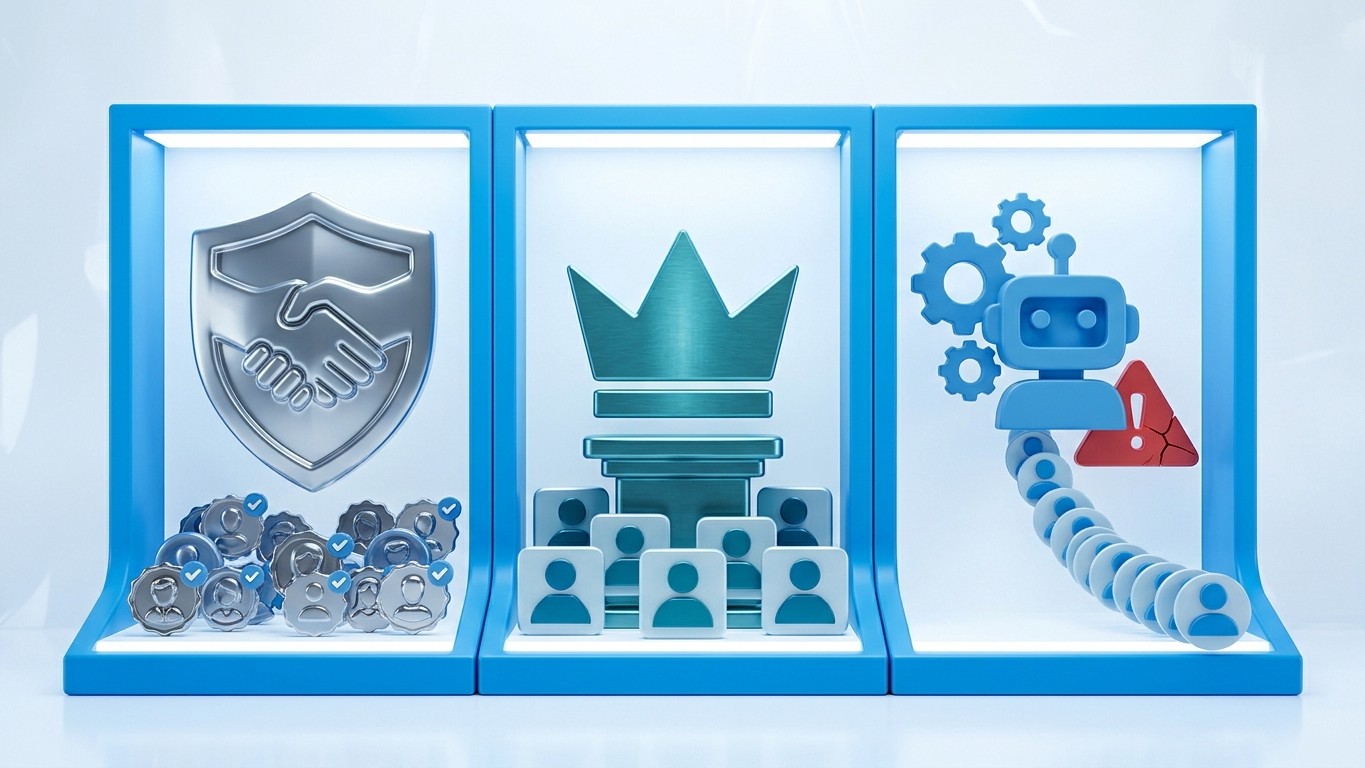
- Real Likes: High Cost | High Quality | Low Risk
- HQ Likes: Medium Cost | Medium Quality | Medium Risk
- Bot Likes: Low Cost | Low Quality | High Risk
Your choice should directly map to the tweet's purpose. Let's walk through two common scenarios.
Scenario 1: Boosting a Marketing Tweet for Credibility
You're launching a new product and your tweet includes a link to the sales page. The goal is to build trust and encourage clicks. A tweet with 2 likes looks deserted; a tweet with 150+ looks validated.
Your best choice: HQ Likes. They provide the necessary social proof to make your tweet look credible to casual viewers. Real Likes would be overkill for the cost, and Bot Likes would destroy the very trust you're trying to build if anyone looked closer.
Scenario 2: Winning a Twitter Poll or Contest
A local radio station is running a poll for “Best Local Coffee Shop” and the winner is determined by the most likes on their reply. The prize is a free month of radio advertising. Here, authenticity is irrelevant; the final count is everything.
Your best choice: Bot Likes. This is a pure numbers game. Speed and volume at the lowest possible cost are your primary concerns. No one is going to audit the accounts liking the tweet; they're just going to count them.
Making the Right Choice for Your Account's Health
There's no magic bullet, but there is a smart strategy. For any brand, influencer, or reseller serious about long-term growth, a blended approach works best. Use a foundation of high-quality (HQ) likes for your day-to-day content to maintain a baseline of social proof. When you have a critical announcement or a piece of hero content, invest in a smaller number of Real Likes to add a layer of undeniable authenticity.
By understanding the different types of Twitter likes available, you move from being a confused buyer to a strategic marketer. You can now choose the right tool for the job, maximizing your budget and, most importantly, protecting the long-term health and credibility of your account. That's how you build social proof that works for you, not against you.